Why is the scheme needed?
UK Climate Targets
The Climate Change Act commits the UK government by law to reducing greenhouse gas emissions by at least 100% of 1990 levels (net zero) by 2050.
The environmental impact of climate change is also linked to significant damage to the UK economy. However, combined, the net-zero transition (estimated to cost a maximum of 2% of UK GDP) is expected to have a net benefit of around 4% of GDP (LSE 2022). Addressing climate change will protect and benefit the UK economy as well.
HM Government’s Net Zero Strategy: Build back greener (2021) confirms:

“By 2035 the UK will be powered entirely by clean electricity, subject to security of supply.”
“The net zero economy will be underpinned by cheap clean electricity, made in Britain. A clean, reliable power system is the foundation of a productive net zero economy as we electrify other sectors – so we will fully decarbonise our power system by 2035”.
Energy Security Strategy
The UK’s Energy Security Plan (March 2023) sets out the steps the Government is taking to ensure the UK is more energy independent, secure and resilient. The Plan builds upon the ambitions set out in the British Energy Security Strategy and the Net Zero Strategy.
Clean Power 2030 Action Plan
The ‘Clean Power 2030 Action Plan: A new era for clean electricity’, published in December 2024, reflects the shared renewable energy ambitions of the UK, Scottish and Welsh Governments. The Plan requires the rapid deployment of new clean energy capacity across the UK and seeks to address three major challenges:
- the need for a secure and affordable energy supply;
- the creation of essential new energy industries supported by a skilled workforce; and
- the need to reduce greenhouse gas emissions and limit the damaging effects of climate change.
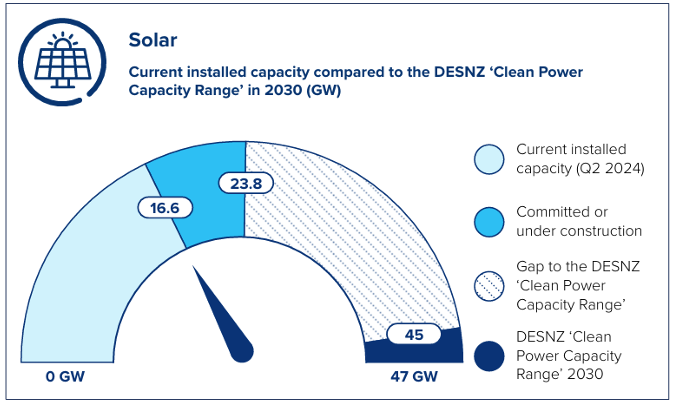
The Plan sets an ambitious target for solar generation of 45–47 GW by 2030. Currently, there is approximately 16.6 GW of installed solar capacity in the UK, rising to around 23.8 GW when committed projects and those under construction are included. The National Energy System Operator (NESO) and the Department for Energy Security and Net Zero (DESNZ) therefore anticipate a substantial increase in solar deployment over the remainder of the decade in order to meet these national targets.
Local targets
- Calling on the UK and Welsh governments to provide the necessary powers and resources to ensure Carmarthenshire County Council becomes carbon neutral by 2030.
- Publicising the climate emergency.
- Working with relevant experts in research and development in reviewing its current strategies and action plans for addressing climate change.
- Identifying any further necessary policy changes or actions, seeking help from local partners and other research bodies to explain local what local work is already underway, achievements already made and setting targets for the future.
- Updating on further work undertaken by the council in this area on an annual basis.
Why this site?
This application will be supported by a suite of technical reports which will assess the impacts of the development and explain how the scheme can be implemented in a careful and sensitive manner. Indeed, the site is well suited to accommodate the proposed solar farm development as illustrated by the following key points:
- It is located within viable proximity of a connection to the local electricity network
- It is available for the proposed duration of the scheme
- It avoids Best and Most Versatile (BMV) Agricultural Land
- The site is not subject to any designated Landscape (AONB, Green Belt or National Park)
- No designated Heritage Assets including listed buildings, registered parklands and Scheduled Monuments would be effected
- It avoids sensitive ecological designations (SSSI, RAMSAR Sites or Wildlife Reserves)
- Offers an opportunity to deliver substantial ecological enhancements through a Biodiversity Net Benefit
- It is located away from nearby residential properties to avoid any amenity impacts
- It is located outside of the Flood Zone
- It benefits from a suitable access for construction and maintenance purposes
- It is sufficiently distanced from other developments (proposed and existing) as to avoid any significant intervisibility between the projects
Carmarthenshire County Council have set out its targets and commitments in tackling Climate Change in their ‘Net Zero Carbon Action Plan’. It says that by 2030, Carmarthenshire County Council will:
- Make commitment to making Carmarthenshire County Council a net zero carbon local authority by 2030
- Develop a clear plan for a route towards being net zero carbon within 12 months
- Collaborate with experts from the private sector and 3rd sectors to develop innovative solutions to becoming net zero carbon.
The site also sits well within the landscape and the existing hedgerows and planting allows for the panels to be accommodated with the site without appearing prominently within the wider landscape.
Decline of centralised fossil fuel power stations and decarbonise the grid
Seven nuclear power stations have been decommissioned in recent years, and all 14 UK coal-fired power stations closed in September 2024. The urgent need for clean renewable generators to reduce carbon emissions is a pressing issue.

Examples of mass decommissioning of fossil fuel power stations are Eggborough and West Burton A. Eggborough, a 2-gigawatt coal-fired generating plant in North Yorkshire, stopped generating in March 2018. West Burton A in Nottinghamshire closed in March 2023. The last coal-fired power station to be operational was Ratcliff on Soar, which closed on 30th September 2024. The urgent need is not only to replace these generators but also to double electricity generation due to demand.
Increase in electricity demand
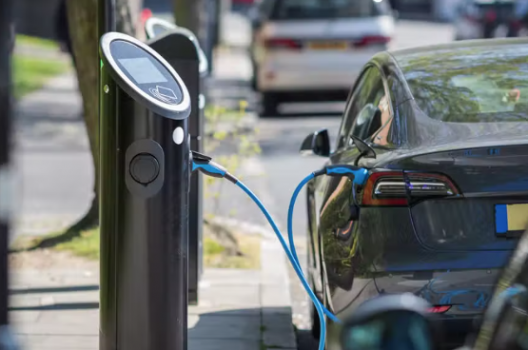
Electricity demand is set to double by 2050 due to the electrification of the UK including widespread use of heat pumps and electric cars.

Benefits
Click titles below to view benefits of the scheme.
- Contribute to the delivery of low carbon and renewable energy projects
- Optimise the output capacity of the existing renewable energy generation connected to the network
- Limit the need for other forms of energy generation from non-renewable sources
- Delivers a net gain in biodiversity
- Will help deliver on the locally declared Climate Emergency.
- Supports sustainable farm diversification on the farming enterprise.
- Supports energy security and less reliance on importation of fossil fuels.
- Helps create a healthier environment through no air pollution.
It is estimated that this scheme will deliver the following economic benefits:
Construction Benefits
Income towards local businesses
New roles created
Supporting existing businesses
Employees and contractors generated
Operational Benefits
Employment generated over its lifetime for maintenance and operation.
*all figures are estimated